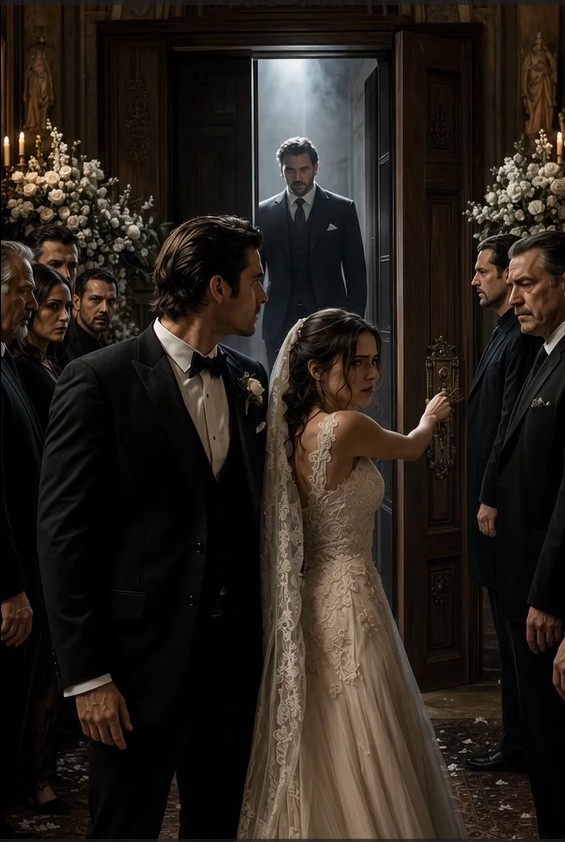
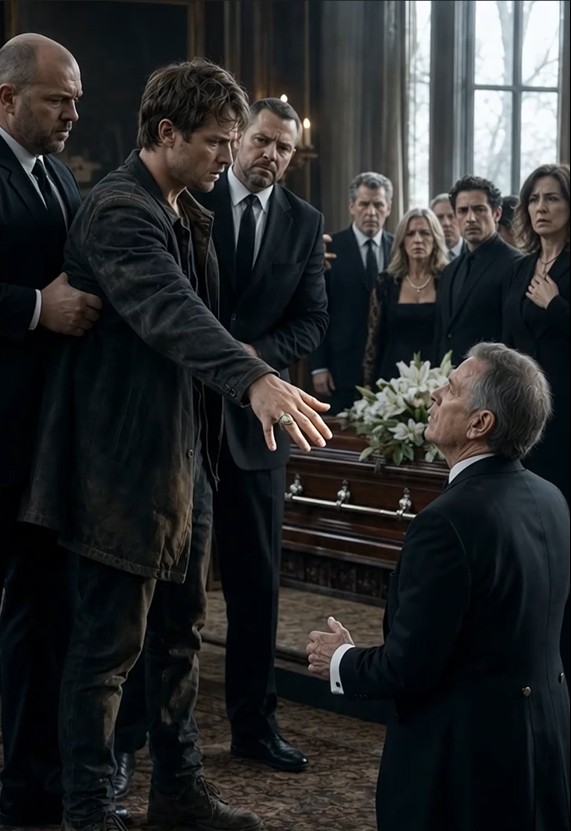
Emily Carter is a kind-hearted cashier whose life changes when a customer’s declined card sparks a violent confrontation and exposes a secret from her mother’s disappearance. What begins with a declined card soon pulls Emily into a dangerous web of betrayal, hidden identities, and a man she may never be able to trust.
PART 1 — THE DECLINED CARD THAT OPENED AN OLD WOUND

“You embarrassed me in front of everyone—I’ll make sure you lose your job!”
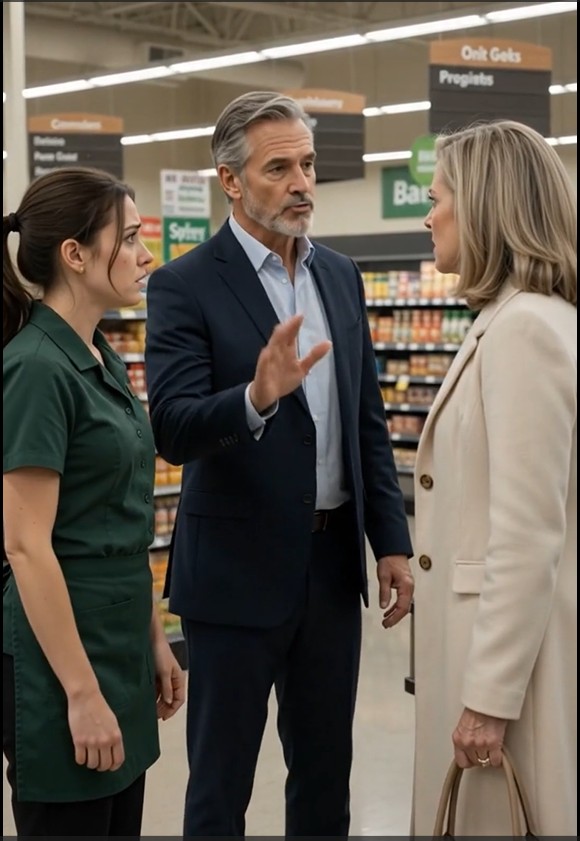
Karen Whitmore screamed the words across register seven and hurled her grocery bag into Emily Carter’s face.
The carton of milk burst first. White liquid soaked Emily’s blue uniform, ran through her dark hair, and splashed across the conveyor belt. Then the bag’s metal buckle struck her cheek, opening a narrow red cut beneath her eye.
Dozens of shoppers went silent.
All because of a declined card.
Karen had inserted the gold bank card three times. Each time, the terminal had issued the same quiet rejection. Emily had lowered her voice and suggested another form of payment, hoping to spare the elegantly dressed woman any embarrassment.
Instead, Karen had turned that courtesy into an accusation.
“Get the manager!” she shouted. “Fire this cashier now, or I’ll have this entire supermarket shut down!”
Emily tasted blood at the corner of her mouth. She did not retaliate. She wiped her cheek with a receipt, knelt in the spilled milk, and began collecting cans rolling beneath the neighboring register.
“Ma’am, I didn’t cause your declined card,” she said. “I only suggested that you try another payment method.”
Karen laughed with such contempt that several customers lowered their phones in shame.
“A poor cashier thinks she can teach me how to spend my money?”
Emily’s fingers tightened around a dented soup can. Rent was due in four days. Her mother’s medical debt had outlived the woman herself. Emily had a business degree in a drawer and two failed management applications in her employee file. One angry customer could destroy the small stability she had spent years building.
Still, she stood and met Karen’s eyes.
“No, ma’am. I think everyone deserves dignity, especially when something goes wrong.”
Karen seized a glass bottle from the bag and raised it.
A plainly dressed man stepped out of the line and caught her wrist.
“That’s enough.”
He was tall, perhaps thirty-eight, wearing an inexpensive gray jacket and rain-darkened shoes. Emily had noticed him earlier because he had spent twenty minutes comparing prices and speaking kindly to an elderly stock clerk. Nothing about him suggested power.
Karen looked him up and down. “Who are you to interfere?”
He released her only after she lowered the bottle. Then he removed a black identification card from his pocket.
“David Miller. I own this supermarket chain, and I witnessed everything.”
The sneer vanished from Karen’s face.
David ordered the security team to preserve every second of surveillance footage. Then he turned to Emily, his anger softening.
“Why didn’t you call security after she struck you?”
Emily looked at Karen. Beneath the rage, the woman’s hands were trembling.
“Because I know what humiliation in public feels like,” Emily answered. “Her declined card was a mistake. I didn’t want the mistake to become a spectacle.”
The whole store seemed to breathe differently.
David had arrived unannounced that morning to evaluate employees for a newly created management position. For weeks, he had received anonymous letters about Emily: that she bought food for homeless customers, covered shifts for single mothers, and returned every dollar shoppers left behind. He had verified each claim without telling her.
“Your business degree shouldn’t be wasted behind a checkout counter,” he said. “Effective today, I’m recommending you as acting store manager, subject to the independent hiring panel.”
The careful qualification mattered to Emily. He was offering an opportunity, not pretending rules disappeared because a powerful man admired her.
Applause broke out around register seven.
Emily barely heard it.
Her attention had fixed on Karen’s necklace—a silver swallow with one wing plated in blue enamel. Emily possessed its twin. It was the only object her mother, Laura Carter, had left behind before disappearing twenty years earlier.
“Where did you get that necklace?” Emily asked.
Karen covered it with one hand.
“That is none of your business.”
“My mother wore the same pendant.”
At the mention of Laura, panic crossed Karen’s face.
David saw it too. “Security will escort you to the office until police arrive.”
Emily stopped him. “Please. Let her explain first.”
Karen looked toward the ceiling cameras, then at the crowd surrounding the register. Her earlier fury seemed to collapse inward. She removed the necklace and placed it beside the terminal that had rejected her declined card.
“It belonged to my younger sister,” she whispered. “Laura.”
Emily forgot the pain in her cheek.
Karen confessed that she was Laura’s estranged older sister. Twenty years earlier, Laura had worked as a forensic accountant for Miller Markets. She uncovered a network of false suppliers and missing charity funds. Before she could deliver the evidence to federal investigators, she vanished.
“If you’re my aunt,” Emily asked, “why did you never come for me?”
Karen’s composure shattered.
“Because the person who made your mother disappear promised you would be next. I thought distance was the only protection I could give you.”
David’s face hardened. “Who threatened you?”
Karen glanced at him, then at the declined card still protruding from the terminal.
“The card was never supposed to fail three times,” she said.
“What does that mean?” Emily asked.
Before Karen could answer, every light in the supermarket went out.
The refrigeration units died. Children screamed. A crash echoed near the emergency exit, followed by the slam of a metal door.
David called for everyone to remain still. Seconds later, red backup lights flickered on.
Karen had vanished.
Her swallow necklace remained on the counter beside a smear of blood and a folded note.
Emily opened it with shaking hands.
Emily, do not trust David. He was the last person to see your mother alive.
She slowly turned.
David stood behind her, no longer looking like a courteous stranger. He locked the front doors using the emergency control and spoke in a low voice.
“There are secrets you were never supposed to uncover.”
Customers began shouting. Several accused him of trapping them. Emily backed away from the man who had defended her only minutes earlier.
“Did you know my mother?”
“Yes.”
“Were you the last person to see her?”
His silence answered before his words did.
“I was seventeen,” David said. “And if whoever caused that blackout is still inside, opening those doors could get someone killed.”
He used a landline to call police because every mobile phone in the building had lost service at the same moment. The outage was targeted, not accidental.
Emily studied the blood. It formed a neat streak instead of scattered drops. Beside it lay Karen’s expensive handbag, but her coat was gone. Either someone had dragged her through the loading corridor with astonishing speed, or she had walked willingly.
David approached the terminal and stared at the rejected card.
“May I?”
Emily hesitated, then nodded.
He removed it carefully. The name embossed across the front was not Karen Whitmore. It read Laura Hale.
Emily’s mother’s maiden name.
On the back, where a signature should have been, someone had written six digits in permanent ink: 071906.
July 19, 2006—the night Laura disappeared.
David went pale.
“That isn’t a bank card,” he said. “It’s an access key.”
The police arrived and searched the building. They found no Karen, no intruder, and no usable image from the loading corridor. The cameras there had been disabled exactly ninety seconds before the blackout.
But the register had preserved something stranger. Each attempt with the declined card had generated an error code. Taken together, the three codes formed a file address on the company’s retired accounting server.
David looked at Emily as an officer photographed her injured face.
“Your aunt didn’t come here to buy groceries.”
Emily held the swallow pendant in her palm.
“She came here to make the system remember.”
PART 2 — THE DECLINED CARD AND THE MAN WHO LIED

At midnight, Emily sat in the manager’s office with a bandage across her cheek and Karen’s declined card sealed inside an evidence bag.
Police had allowed David’s cyber-security director to inspect the transaction log under supervision. The file address led to a dormant archive created the year Laura vanished, but opening it required an encryption phrase no one possessed.
David dismissed the remaining executives and offered Emily a ride home.
“I’m not getting into your car until you tell me what happened twenty years ago.”
He accepted the refusal without protest.
When David was seventeen, his father, Richard Miller, controlled Miller Markets with equal measures of charm and fear. Laura had been hired to audit a community program that claimed to provide groceries to low-income families. She discovered that millions of dollars had been diverted through imaginary vendors.
One rainy night, Laura arrived at the Miller home carrying a leather ledger. David overheard her arguing with Richard in the library.
“She accused my father of stealing from hungry children,” David said. “He denied it. Then she asked me to drive her to Union Station.”
“Why you?”
“Because she said I was the only Miller who still looked ashamed.”
He drove Laura to the station. Before leaving the car, she handed him a sealed envelope and asked him to mail it if she failed to call within forty-eight hours.
“Did you mail it?” Emily asked.
David looked away.
“No.”
The word cut more deeply than Karen’s buckle.
Richard found the envelope in David’s room the next morning. He claimed Laura was an extortionist trying to destroy thousands of jobs. David believed him—or wanted to.
“Three days later, your mother was reported missing. By the time I understood that my father had lied, the envelope was gone.”
Emily stood so abruptly that the chair struck the wall.
“You could have saved her.”
“Yes.”
He did not offer youth as an excuse. That made it harder to hate him cleanly.
After Richard died, David inherited the company and began searching old records. He found payments to a shell corporation named Northstar Logistics, authorized by the board’s current chairwoman—his mother, Helen Miller—and by the chief financial officer, Victor Dane. Richard’s signature appeared on some transfers, but not all.
“Why didn’t you go to the police?”
“I did, with what I had. It wasn’t enough. The records had been altered, witnesses recanted, and Victor claimed the vendors were legitimate. I spent years rebuilding the chain and tracing the money.”
“Quietly.”
“Yes.”
“Protecting your family name.”
David did not deny it.
The next morning, Emily rejected the acting-manager position. She would not accept a promotion born at the same register where she had been assaulted, nor work directly beneath a man connected to her mother’s disappearance.
David sent the decision to the independent hiring panel and removed himself from the process.
“Whatever you decide about me,” he said, “the opportunity remains yours to earn without my influence.”
That restraint unsettled her more than pressure would have.
Emily returned to register seven. The public had transformed her humiliation into a viral spectacle. Strangers called her brave. Others accused her of arranging the scene to win a promotion. A slowed video made it appear that she had whispered an insult before Karen threw the bag.
The humiliation no longer belonged to her; the internet had claimed it.
During her lunch break, a homeless veteran named Samuel Reed approached. Emily had quietly bought him meals for two years.
“The angry woman came in last week,” he said. “She asked which register you used.”
“Did she say why?”
“She gave me this.”
He handed Emily a receipt with a handwritten message: When the declined card wakes the archive, follow the birds home.
At the bottom were two swallow symbols and an address.
Emily should have called police. Instead, she called Detective Lena Ortiz, the officer assigned to Karen’s disappearance, and gave her the address. Ortiz warned her to remain at work.
Then Emily went anyway.
David was waiting in the parking lot.
“Samuel gave you a receipt too?” she asked.
“No. I watched the security footage and saw him approach you.”
“So you followed me.”
“I was afraid you would do exactly this.”
“You don’t get to decide what I can survive.”
He flinched. “Your mother said the same thing to me.”
The address led to a boarded neighborhood grocery store that Miller Markets had closed twelve years earlier. Two swallows had been carved into the rear door.
Emily tried the six-digit date from the declined card on the keypad. The lock opened.
Inside, dust covered empty shelves. Yet fresh footprints crossed the floor toward the old customer-service desk. Underneath it they found a cassette recorder, a photograph, and another envelope.
The photograph showed Laura, Karen, Richard, Helen, and Victor at a charity gala. Laura was visibly pregnant.
On the back she had written: One of them stole the money. One of them helped. One of them tried to stop it.
David pressed play on the recorder.
Laura’s voice filled the abandoned store.
“Emily, if you hear this, Karen succeeded. I am sorry that a declined card had to become the key, but electronic records survive when people do not.”
Emily covered her mouth. She had not heard her mother’s voice since she was nine.
“Do not assume Richard Miller was the architect. Do not assume David is innocent because he was young. And do not trust my sister merely because she shares my blood. Every one of us made a choice that night.”
The recording ended with the sound of someone entering the room and Laura whispering, “You weren’t supposed to find me.”
Then came a man’s voice.
David’s voice.
“I came to help you.”
Emily turned on him.
“You said the station was the last time.”
David stared at the recorder as if it had struck him.
“It was. I never came here with her.”
The rear door slammed shut.
Smoke began pouring through the ventilation grates.
Someone had set fire to the stockroom.
David wrapped his jacket around Emily’s face and tried the keypad, but the code no longer worked. Flames spread through twenty-year-old shelving, sealing the main exit.
Emily remembered the layout from childhood. Her mother used to bring her to that store on Saturday mornings. Behind the dairy cooler was a narrow delivery chute.
They crawled beneath the smoke. A burning beam fell, pinning David’s leg. He told Emily to leave him.
“No one makes that choice for me again,” she said.
Using a broken shelf support as a lever, she freed him and dragged him to the chute. They fell into the alley seconds before the roof collapsed.
Detective Ortiz arrived with firefighters. She was furious that Emily had ignored instructions, but the evidence left in the store had survived because Emily had placed it inside a metal freezer.
The voice analysis produced the next twist: the man on Laura’s recording was not David. It was Richard Miller. Their voices had been almost identical when both were young.
Someone had wanted Emily to hear it and accuse the son.
That evening, David sat beside Emily outside the hospital while doctors treated the burn on his leg. He asked why she had risked her life for him.
“Because guilt is not evidence,” she answered. “And because leaving you there would have turned someone else’s crime into my choice.”
He looked at her with an emotion neither of them was ready to name.
“I’m still angry with you,” she added.
“You should be.”
His honesty created a dangerous kind of closeness.
Ortiz emerged carrying a tablet. Traffic cameras had captured Karen after the blackout. She had entered a black van voluntarily. The driver was a woman with silver hair.
Facial recognition found an old driver’s-license photograph.
The woman behind the wheel was Laura Carter.
Emily’s mother was alive.
PART 3 — THE DECLINED CARD AND THE MOTHER WHO RETURNED

Emily watched the traffic footage seventeen times.
The silver-haired driver was older and thinner, but the way she turned her head before changing lanes was unmistakable. Laura had always checked the mirror twice.
Twenty years of grief collapsed into eleven seconds of video.
“She was alive while I buried an empty coffin,” Emily whispered.
David stood at the far end of the hospital corridor, giving her space.
Detective Ortiz traced the van to a lakeside cabin registered to Northstar Logistics. By sunrise, police surrounded it. Emily waited behind the barricade with David despite Ortiz’s objections.
Karen emerged first, unharmed except for the cut on her palm that had produced the blood at register seven. Then Laura stepped into the morning light.
Emily had imagined this reunion in a thousand impossible ways. In none of them did she remain motionless.
Laura walked toward her, tears streaming down a face that was both strange and intimately familiar.
“My little bird.”
Emily recoiled.
“Don’t call me that.”
Laura stopped.
“You were alive.”
“Yes.”
“Every birthday?”
“Yes.”
“When I graduated alone? When I sold your clothes to pay the mortgage? When I sat beside an empty coffin and apologized because I couldn’t find your body?”
Laura’s answer was barely audible. “Yes.”
Emily slapped her.
The sound startled everyone, including Emily. Laura did not raise a hand to her cheek.
“I deserved that,” she said.
“You don’t get to decide what would make this equal.”
Inside the cabin, Laura told the story police had failed to uncover.
The charity fraud had not begun with Richard. Helen Miller and Victor Dane created Northstar Logistics years before Richard inherited the company. They inflated food invoices and diverted the difference into political donations and private accounts. Richard discovered the scheme and initially tried to stop it.
Then Helen threatened to expose his affair with a supplier and take David away. Richard began signing transfers. Complicity slowly became comfort; by the time Laura confronted him, he had accepted millions.
Laura collected evidence and planned to testify. Karen, who worked in the bank’s processing department, helped route one fraudulent payment in exchange for money to cover Emily’s emergency heart surgery as an infant.
“I told myself it was one transfer,” Karen said. “But one signature gave them a chain around my neck.”
The declined card was connected to that first account. Karen had preserved it for two decades.
On the night Laura vanished, Richard met her at the abandoned store. The recording had captured his plea to help. He gave Laura internal ledgers and offered to testify against Helen.
Before they reached federal agents, Victor’s men intercepted them. Richard was beaten and returned home under threat. Laura escaped with Karen’s help.
“Why didn’t you take me?” Emily demanded.
Laura looked at Karen.
“Victor sent us a photograph of you asleep in your bedroom. He said if I contacted you, you would die before I reached the door.”
“So you disappeared for twenty years?”
“For the first five, I was moved between safe houses by a federal investigator named Paul Sloane. Then Paul was murdered, and every witness in the case was exposed. I no longer knew whom to trust.”
“You could have tried later.”
Laura’s silence was the first honest answer.
“You could have tried,” Emily repeated.
“Yes. Later, I could have.”
Fear had protected Emily at first. Eventually, fear protected Laura from facing the daughter she had abandoned.
Karen explained the supermarket confrontation. Laura recently learned Helen planned to sell Miller Markets, erase its old servers, and move the Northstar funds offshore. The archive could only be awakened by inserting the declined card three times into a register still connected to the original system.
“Why attack me?” Emily asked.
Karen’s face crumpled. “I was supposed to create a loud argument so every camera pointed at us. I was supposed to drop the bag, not throw it. Then I saw you. You have Laura’s eyes, and I remembered everything I had lost. Shame turned into anger. I chose you because blaming you felt easier than facing myself.”
The confession offered no noble disguise. Karen’s first cruel words had been planned; the violence had not.
“You used my humiliation as cover.”
“Yes.”
“And then left me a warning against David.”
Laura admitted writing the note years earlier. At the time, she believed David had surrendered her envelope knowingly. Karen placed it on the counter during the blackout. The outage was created by Laura using an old maintenance override; Karen walked out to meet her.
“The blood?”
“I cut my palm on the emergency latch,” Karen said.
“You let police think you had been abducted.”
“We needed Helen to believe I had been taken by someone else.”
Emily laughed once, without humor.
“Every person in this room keeps calling manipulation protection.”
David asked about the fire at the abandoned store. Laura denied setting it. Karen had told no one about the location.
That meant Helen knew their plan.
Detective Ortiz received a call from headquarters. The accounting archive awakened by the declined card had begun deleting itself remotely. They had less than three hours before the final files vanished.
David offered access to the corporate network. Laura refused to trust him.
“Your mother controls the board,” she said. “Your company buried me.”
“And you sent anonymous letters about Emily to me,” David replied. “You trusted me enough to place your daughter in my path.”
Emily stared at Laura.
The letters praising her work had come from her mother.
Laura admitted watching Emily from a distance for years. She knew about the business degree, the eviction notice, even the meals Emily bought for Samuel.
“You watched me struggle and did nothing.”
“I was trying to keep you safe.”
“Stop using that sentence.”
Laura lowered her eyes.
To save the archive, they needed to reach the central server room beneath Miller Markets headquarters. Helen had called an emergency board meeting there to approve the company’s sale.
David could enter. Emily, still an employee, could access the retail network. Laura knew the encryption phrase. Karen’s declined card supplied the physical key.
They needed one another, even though trust among them had been reduced to ash.
Before leaving, David pulled Emily aside.
“You don’t have to do this.”
“Neither did you when you stepped between me and that bottle.”
“That was different.”
“Because you owned the store?”
“Because losing my job wasn’t the risk.”
Emily studied him. His burn had reopened through the bandage, yet he had not mentioned it.
“When this ends,” she said, “I don’t know what you and I are.”
“Right now, I’m the man who failed your mother once and refuses to fail her daughter.”
“That sounds like guilt.”
“Partly.” He held her gaze. “The rest is something I won’t use while you work for me.”
There it was—the unnamed feeling, acknowledged without demand.
Emily stepped closer, close enough to hear his breathing.
“Then help me end the part that belongs to guilt,” she said. “We’ll decide what remains afterward.”
At headquarters, Helen greeted them in the marble lobby as if she had expected their arrival.
At seventy, she remained elegant and terrifyingly calm. Victor Dane stood beside her with two corporate security officers.
“Laura,” Helen said. “Twenty years in hiding, and you return because of a declined card.”
Laura froze.
Helen smiled at Emily.
“Your mother has omitted one important detail. She did not merely uncover the Northstar scheme.”
Helen placed an original ledger on the table.
Every fraudulent transfer carried Laura Carter’s authorization.
“She designed it.”
PART 4 — THE DECLINED CARD AND THE PRICE OF LOVE

The ledger appeared genuine.
Laura’s initials marked hundreds of payments. Her private encryption code appeared beside Northstar’s first account—the same code hidden inside Karen’s declined card.
Emily felt the room tilt.
“Tell me it’s forged.”
Laura did not.
Before joining Miller Markets, Laura had designed an automated vendor-payment system. Helen praised the young accountant and asked her to create a confidential route for emergency purchases. Laura built Northstar without knowing it would be used to steal.
“When I discovered the fraud, I could have shut the route down,” Laura said. “Instead, I kept it open for six months while I copied the transactions.”
“Six months of money stolen from families,” Emily said.
“If I closed it, Helen would destroy the evidence.”
“And you decided the victims could afford your strategy.”
Laura’s eyes filled. “Yes.”
Helen offered Emily a folder containing records of her childhood surgery. The anonymous foundation that had paid most of the bill was financed through Northstar.
Emily understood why Karen’s single transfer had mattered.
The stolen money had saved her life.
Helen spoke gently. “Your mother did not leave only because she feared for you. She left because testifying would reveal that her child survived on money taken from other hungry children.”
Laura looked twenty years older.
“I was ashamed,” she whispered.
The truth did not make Helen innocent. It made innocence impossible for everyone else.
David demanded access to the server room. Helen refused and announced that the board had removed him as chief executive for endangering the sale.
Then she played edited surveillance footage of the supermarket. It showed Emily apparently provoking Karen before the assault, David announcing a promotion, and Karen disappearing during an outage triggered with Emily’s employee credentials.
“By morning,” Helen said, “the public will believe a desperate cashier conspired with her aunt and seduced the owner to extort this company.”
Emily’s face burned.
David stepped forward, but Emily stopped him.
“Let her finish.”
Helen offered a bargain. Laura would surrender every copy of the evidence. Karen would sign a confession taking responsibility for the declined card scheme. David would approve the sale. In return, Emily would receive five million dollars and public vindication.
“You believe everyone has a price,” Emily said.
“Everyone does. The honest ones simply name theirs something prettier—family, justice, love.”
David’s mother had spent a lifetime turning human need into leverage.
Emily picked up the folder documenting her surgery.
“You’re right about one thing. That money is part of my life. So I’ll spend the rest of my life returning it.”
She tore the agreement in half.
Victor ordered security to detain them.
One of the guards moved toward Emily. The other turned and handcuffed Victor.
Detective Ortiz stepped from the elevator with federal agents.
David had transmitted the entire conversation through his phone.
For a moment, victory seemed possible.
Then Helen laughed.
The archive timer reached zero.
Every server screen went black.
“You recorded a conversation,” Helen said. “I own judges, investigators, and the original evidence. Without the archive, you have a family argument and a dead man’s ledger.”
Federal agents arrested Victor on obstruction charges, but Helen’s lawyers blocked the seizure of the building’s servers. The chairwoman walked into the elevator untouched.
As the doors closed, she looked at David.
“You chose a cashier over your mother.”
“No,” he answered. “I chose the truth over the woman who taught me to fear it.”
The archive appeared gone.
But Emily remembered Laura’s first recording: electronic records survive when people do not. A declined transaction did not merely contact the central server. It also created redundant logs in every register involved in the original network.
Register seven held a fragment.
The abandoned store held another.
The first Northstar account had processed through a third register displayed in an old photograph. It belonged to the chain’s original market, now used as a museum for the company’s anniversary gala.
The three error codes were not one file address. They were three pieces of a reconstruction key.
“The archive deleted its map,” Emily said. “Not the roads.”
They raced to the anniversary gala, where Helen was scheduled to announce the sale before investors and reporters. Hundreds of guests filled the restored market. At its center stood register one, polished and disconnected beneath glass.
Karen’s declined card fit a hidden slot under the drawer.
While Laura and Ortiz connected the old machine, David confronted the board. Emily searched archived receipt rolls in the museum office. Helen had already arrived and quietly ordered the building evacuated under the pretense of a gas leak.
The exits locked before everyone could leave.
Smoke began entering the ballroom.
It was the same method used at the abandoned store.
Victor, released pending a hearing through Helen’s influence, had entered through a service tunnel. He seized the declined card and dragged Karen into the cold-storage wing.
Emily followed despite David shouting her name.
In the freezer corridor, Victor held a knife against Karen’s throat.
“Your mother should have accepted the first warning,” he told Emily.
“You killed the investigator.”
“Helen ordered it. Richard objected. That was when she decided her husband had become a liability.”
Richard’s fatal heart attack twelve years earlier had not been natural.
Victor admitted replacing his medication on Helen’s orders. He had also set both fires and forged the digital footage. Now he wanted the physical card, the last object connecting him to Northstar.
Karen elbowed him and broke free. Victor slashed her shoulder. Emily struck him with a fire extinguisher, but he threw her against the freezer door and locked both women inside.
The temperature fell rapidly.
Karen was bleeding. Smoke filled the corridor outside, and the freezer’s emergency release had been removed.
“This is my fault,” Karen said through chattering teeth. “The declined card, the bag, all of it.”
“Confess later. Stay awake now.”
Emily examined the old refrigeration panel. Years behind a register had taught her more about the store than any executive understood. During compressor failures, cashiers used a manual alarm beneath the freezer shelving.
She found the cable, stripped it with the edge of Karen’s necklace, and crossed the wires. The fire alarm changed frequency, sending a distress code directly to the department outside.
David reached the corridor but found Victor waiting. The two men fought in the smoke. Victor struck David’s injured leg and raised the knife.
Laura appeared behind him.
She held a pistol taken from a security officer.
“Open the freezer.”
Victor smiled. “You didn’t shoot me twenty years ago.”
“Twenty years ago, I believed keeping my hands clean made me good.”
“And now?”
“Now I know goodness is what you choose when every option leaves a stain.”
She fired—not at Victor, but at the overhead sprinkler main. Pressurized water knocked him off balance. David tackled him and took the knife.
Firefighters opened the freezer. Emily emerged supporting Karen, her lips blue but her hand still closed around the declined card.
The reconstructed archive loaded onto register one.
It contained transfers, recorded calls, photographs, and Richard’s final video confession. It also contained a file no one expected: messages between Helen and Laura sent five years after Laura vanished.
Laura had secretly negotiated with Helen.
In exchange for Helen leaving Emily unharmed, Laura agreed not to testify and received annual payments through an offshore account.
Emily stared at her mother.
“You took her money.”
“I used it to pay investigators and preserve evidence.”
“All of it?”
Laura could not answer.
Some had purchased the cabin. Some had paid for a quiet life. Protection and comfort had become entangled until Laura could no longer say where one ended.
David asked Emily’s permission before taking her hand.
She let him, but she did not lean on him.
The evidence would destroy Helen’s empire. It would also expose Laura’s complicity, Karen’s fraud, Richard’s cowardice, and David’s years of silence.
“Release everything,” Emily said.
David looked at the company his family had built.
Then he pressed send.
PART 5 — THE DECLINED CARD THAT COULD NOT BE BOUGHT
The truth did not arrive like justice in a clean white coat.
It arrived as indictments, layoffs, cameras, anger, and thousands of families learning that a trusted supermarket had stolen from the charity bearing its name.
Helen Miller was charged with conspiracy, fraud, witness intimidation, and Richard’s murder. Victor Dane accepted a plea agreement and testified against her, though he received twenty-eight years for murder, arson, kidnapping, and attempted murder.
Helen never apologized. At sentencing, she called herself a protector of the company.
The judge answered, “You protected an institution by consuming every person inside it.”
She died in prison six years later, still insisting that love justified control.
Laura pleaded guilty to concealing evidence and accepting illicit payments. Prosecutors recognized her cooperation but did not erase her choices. She received two years in a minimum-security facility and surrendered the remaining money.
Karen pleaded guilty to her role in the original transfer and to assaulting Emily. The viral video showed the court what no family secret could soften: she had struck a cashier who did not know why she was being used.
At sentencing, Karen refused her attorney’s attempt to describe the assault as part of a noble plan.
“The declined card was planned,” she said. “My cruelty was mine.”
She received community confinement, probation, and an order to pay restitution. Emily did not ask the judge for mercy or severity.
“Accountability chosen by the victim is still power taken from the victim,” she explained. “Let the law do its work.”
David resigned as chief executive and surrendered the controlling shares inherited from his parents. The company entered court-supervised restructuring. A portion was sold to repay the charity; the remaining stores became employee-owned.
Many workers blamed Emily for the uncertainty. Some thanked her. She learned that doing the right thing did not guarantee being loved for it.
The independent hiring panel offered her the manager position again.
This time, Emily accepted.
She did not accept because David had seen something special in her. She accepted because she had completed the same assessments as every finalist and earned the highest score.
Register seven remained in service. Emily refused suggestions to replace it. Beside the terminal she placed a small sign:
A declined card declines a payment, never a person.
Customers began leaving notes beneath it about moments when poverty, illness, or grief had made them feel small. Emily used the stories to build a quiet assistance fund financed by voluntary donations and her own salary.
She named it the Open Door Fund, not after her mother or the Miller family.
David spent the following year testifying in court and working without pay to help employees convert the stores. He did not send Emily flowers. He did not arrive at closing time to demand gratitude for choosing her side. He understood that dramatic romance could become another form of pressure when one person still held power.
They met only in public, usually over coffee, and spoke about ordinary things. Emily learned that David hated olives, repaired antique radios, and woke from dreams in which he was seventeen again, holding Laura’s unopened envelope.
He learned that Emily sang badly while counting inventory and still checked her bank balance before buying anything more expensive than twenty dollars.
One evening, after the employee trust formally removed David from authority over her, he asked whether they could have dinner that was not about evidence or court.
“Is this guilt?” she asked.
“Some guilt will always be there,” he said. “But no. This is me asking, and you being free to decline.”
The word made her smile.
“One dinner.”
They moved slowly.
Their first kiss happened months later beneath the supermarket awning during a rainstorm. It was not a reward for surviving danger. It was an agreement to see what honesty could build when neither person controlled the other’s future.
David never promised to protect Emily from every secret. He promised to tell her when he was afraid of the truth.
Emily never promised instant forgiveness. She promised not to use silence as punishment.
Laura wrote from prison every week. Her letters did not ask to be called Mom. She answered questions about the years she had missed and returned every excuse Emily refused to accept.
Emily read some letters immediately. Others remained unopened for months.
When Laura was released, they met at register seven before the store opened. Laura wore no disguise. She carried the silver swallow necklace and placed it on the conveyor belt.
“This belongs to you.”
Emily pushed it back.
“It belongs to the woman you were when you still believed telling the truth was worth losing everything.”
Laura’s eyes filled. “I don’t know if that woman still exists.”
“Then become her again. Not for me.”
“Will you ever forgive me?”
Emily looked at the mother she had mourned and the stranger who had survived.
“I forgive the terrified woman who ran to keep a child alive. I don’t yet forgive the woman who stayed away because returning was difficult.”
Laura nodded. “That’s fair.”
“No. It’s honest. Fair would give me twenty years back.”
They began with breakfast once a month.
Karen’s path was different. Emily required her to complete the court-ordered program before any private contact. When they finally met, Karen brought no gift.
“I used to think being ashamed proved I was sorry,” Karen said. “But shame only kept me staring at myself.”
She had started working with a legal-aid organization helping families challenge predatory debt. Every hour of service was documented; none erased the assault.
“I don’t need you to tell me I’m a good person,” Karen said.
“Good,” Emily replied. “I don’t know if you are.”
Karen almost laughed. “Do you think we can be family?”
“Maybe. But blood gets you a name, not access.”
Two years after the declined card incident, David took Emily to the old neighborhood store. The ruins had been cleared. In their place stood a community market, training center, and free legal clinic funded by the recovered Northstar money.
Near the entrance, a bronze plaque listed the victims of the charity fraud. Emily’s name appeared among them because stolen money had paid for her surgery.
She had insisted on it.
“Why include yourself?” David asked.
“Because benefiting from harm doesn’t make me guilty of causing it. But hiding the benefit would repeat the family tradition.”
He took a small box from his coat.
Emily raised one eyebrow. “If that contains a ring in front of a building named after financial crime, your timing needs work.”
David laughed and opened it.
Inside was the black identification card he had shown Karen at register seven, cut into two pieces.
“I carried this because I thought ownership told people who I was,” he said. “You taught me it only told them what I controlled.”
Beneath it lay a simple brass key.
“What does that open?”
“The front door of a house I’m considering. I want you to see it. Nothing has been purchased. Nothing has been decided.”
Emily closed the box.
“That is the least romantic proposal I have ever heard.”
“It isn’t a proposal.”
“Good.”
“The ring is at home.”
She stared at him.
He grinned, and for the first time their past felt light enough to carry without letting it lead.
David proposed three months later in Emily’s kitchen after she burned dinner and the smoke alarm began screaming. He offered no audience, no cameras, and no speech about destiny.
“You can say no,” he told her. “You can say not yet. You can change your mind tomorrow. I will still tell you the truth.”
Emily said yes.
At their small wedding, Laura sat in the second row. Karen sat on the opposite side. Neither was given a ceremonial role. Love had brought them back into Emily’s life; accountability determined where they stood.
Samuel Reed walked Emily down the aisle. When someone asked why, she said, “Because he saw me before anyone thought I was important.”
Years later, Emily became chair of the employee-owned market cooperative. She required transparent audits, anonymous reporting, and emergency assistance for customers whose payments failed.
Whenever a declined card appeared on a register, employees were trained to lower their voices, offer options, and remember that a financial error revealed nothing about a person’s worth.
The original gold declined card was displayed in the training center beneath glass. Its description did not call Karen a hero or Laura a saint. It explained that flawed people had used one object first to hide a crime, then to uncover it.
On the twentieth anniversary of the reopened case, a journalism student interviewed Emily.
“What was the greatest betrayal?” the student asked. “Karen attacking you? David withholding the envelope? Your mother remaining hidden? Or Helen stealing from children?”
Emily considered the question.
“Helen’s crime caused the greatest harm. But betrayal isn’t measured only by damage. It is measured by the trust someone was given before they broke it.”
“Did you forgive everyone?”
“No.”
“Even after all these years?”
“Forgiveness is not a receipt proving the account is settled. Sometimes love returns while trust remains limited. Sometimes accountability repairs a relationship. Sometimes the healthiest ending is a locked door.”
“Then why keep the declined card?”
Emily looked through the glass at the worn gold surface.
“Because that declined card taught me the most important difference in my life. Rejection can be an event. It does not have to become an identity.”
That evening, Emily closed register seven and found an envelope beneath the terminal. For one frightening second, she was back in the spilled milk with blood on her cheek.
Then she recognized Laura’s handwriting.
Inside was a single page.
Emily, today marks twenty years since I chose fear over coming home. I used to believe survival was the same as courage. You taught me that courage begins when survival is no longer the only thing we protect. I do not ask you to forget. Thank you for allowing me to become someone who can remain.
Emily folded the letter and placed it beside the declined card.
David waited near the exit with their young daughter, Grace, asleep against his shoulder. He did not ask what the letter said. He waited for Emily to decide whether to share it.
She handed it to him.
That small choice was what trust looked like now—not blind faith, not perfect certainty, but truth offered freely.
As they turned off the lights, Grace woke and pointed toward the display.
“Mommy, why is that old card important?”
Emily lifted her into her arms.
“Because once, many people saw a declined card and thought it meant someone had failed. But it became the key that made a whole family tell the truth.”
Outside, the market’s windows reflected three generations walking home together—not healed because the past had vanished, but stronger because no one was required to lie about it.
Emily had been humiliated before a crowd, betrayed by the mother she mourned, endangered by the aunt who claimed to love her, and drawn toward a man whose silence had helped shape her loss.
She did not win by remaining endlessly kind.
She won by learning where kindness ended and boundaries began.
She forgave without surrendering memory. She loved without surrendering judgment. And she accepted that a meaningful ending did not make every wounded person innocent.
So if you were Emily, whose apology would you accept?
Could you forgive Karen for turning a declined card into public humiliation, Laura for choosing twenty years of absence, and David for failing to mail the envelope that might have changed everything?
Or are some betrayals too deep for love to repair—even when the people responsible spend the rest of their lives trying?
Tell us in the comments: who deserved Emily’s forgiveness, and who crossed a line that should never be erased?
#CashierDrama #DeclinedCard #FamilySecrets #RomanticMystery #BetrayalAndForgiveness